
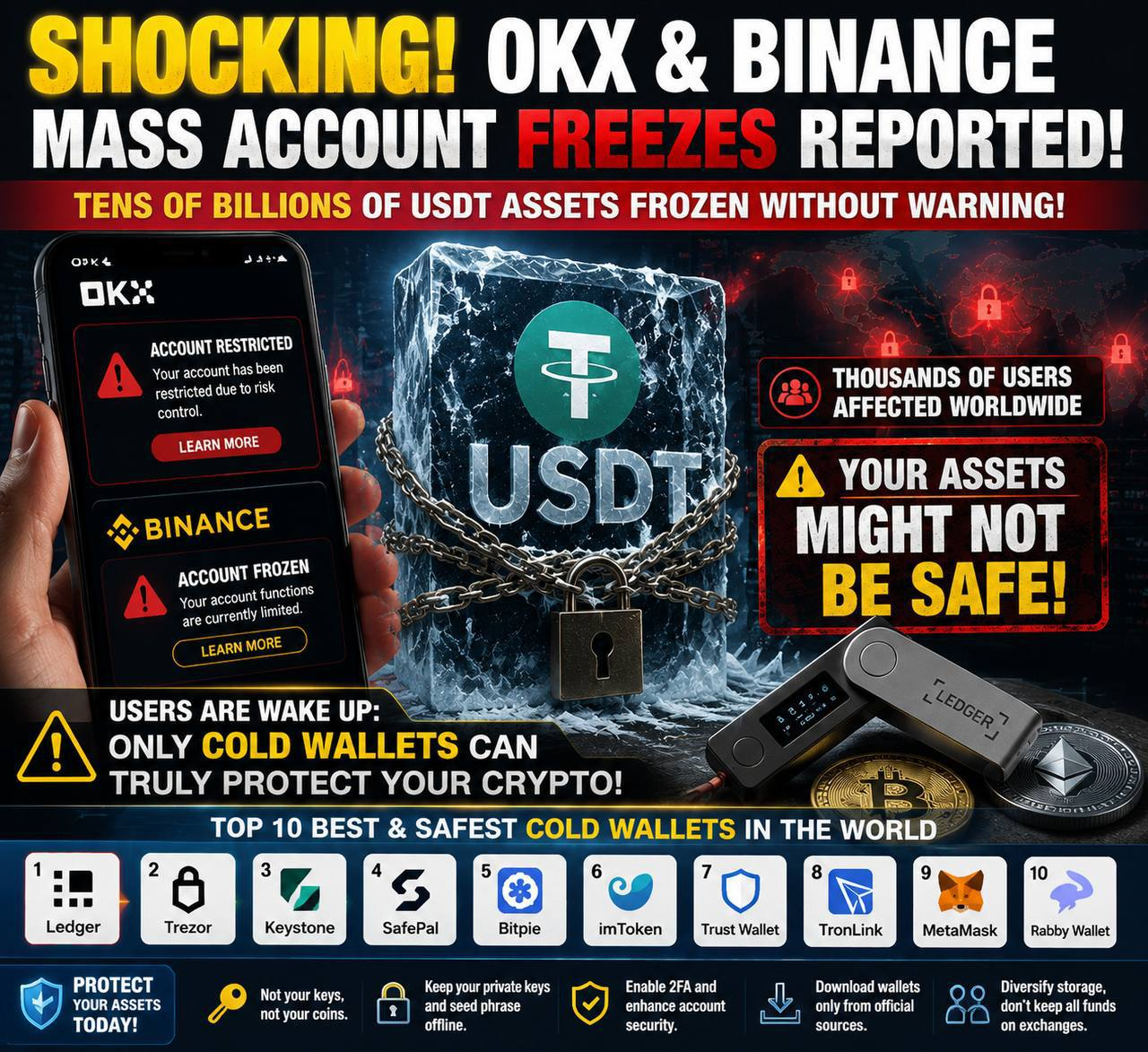
A sudden cryptocurrency storm has swept the globe.
Global cryptocurrency exchanges, including EOS and Binance, have suddenly launched the largest-ever risk control measures. A large number of accounts have been temporarily restricted from withdrawals and trading due to system audits, drawing significant attention from investors worldwide.
The news quickly spread on social media. Many investors are worried that if their assets are held long-term on centralized exchanges, future risk control measures, technical glitches, regulatory policy changes, or other unforeseen events could affect asset management. Therefore, they are beginning to rethink how to safeguard their digital assets.
A classic saying circulates in the cryptocurrency world:
“Not your keys, not your coins.”
This means that if you don't control your private key, your control over your assets may be affected by a third-party platform.
Therefore, an increasing number of experienced investors are choosing to transfer their long-term holdings of assets such as BTC, ETH, and USDT to self-custodied wallets where they control their private keys, reducing the risk associated with relying on a single platform.
Common Self-Custodial Wallets Globally
1. Trust
Offers stronger protection against malicious overlays during transactions. High-strength security; connections and exchanges via dApps are now more stable and reliable.
2. TokenPocket
Comprehensive security protection; trusted by over 25 million users worldwide, covering more than 200 countries and regions.
3. Keystone
Adopts an offline (air-gapped) design, using QR codes to sign transactions, reducing the risk of cyberattacks.
4. SafePal
Provides hardware and software wallet solutions, supporting multiple public chains.
5. Bitpie
A common multi-chain self-custodial wallet in the Chinese-speaking world, supporting various mainstream crypto assets.
6. imToken
A widely used Web3 wallet in Asia, supporting multi-chain ecosystems and decentralized applications.
7. Trust Wallet
Supports multiple public chains and a large number of tokens, enabling the management of diverse digital assets.
8. TronLink
A commonly used wallet in the TRON ecosystem, suitable for managing TRX and TRC20 assets.
9. MetaMask
One of the most representative self-custodial wallets in the Ethereum ecosystem, widely used in DeFi and NFTs.
10. Rabby Wallet
Focusing on multi-chain management and transaction risk warnings, it is popular among advanced users.
Advice for Protecting Digital Assets
- For large amounts of assets held long-term, consider using a hardware wallet.
- Keep your mnemonic phrase and private key safe; never disclose or upload them to the cloud.
- Enable two-factor authentication (2FA) and improve account security.
- Avoid storing all your assets on a single platform.
- Download wallet software only through official channels and be wary of phishing websites and scams.
In the cryptocurrency world, regardless of market fluctuations, establishing sound asset management and security awareness is always a crucial aspect of protecting your digital assets.